How a telecom inventoried 5,000 servers for NIS2 and a network move
Per Mariager, a freelance IT security and network consultant, needed an automatic software inventory for NIS2 and a plan to move about 5,000 servers to a new network. Mugato collected the inventory without installing anything on the protected production servers, found servers the team had been missing and turned up old software that could be removed.
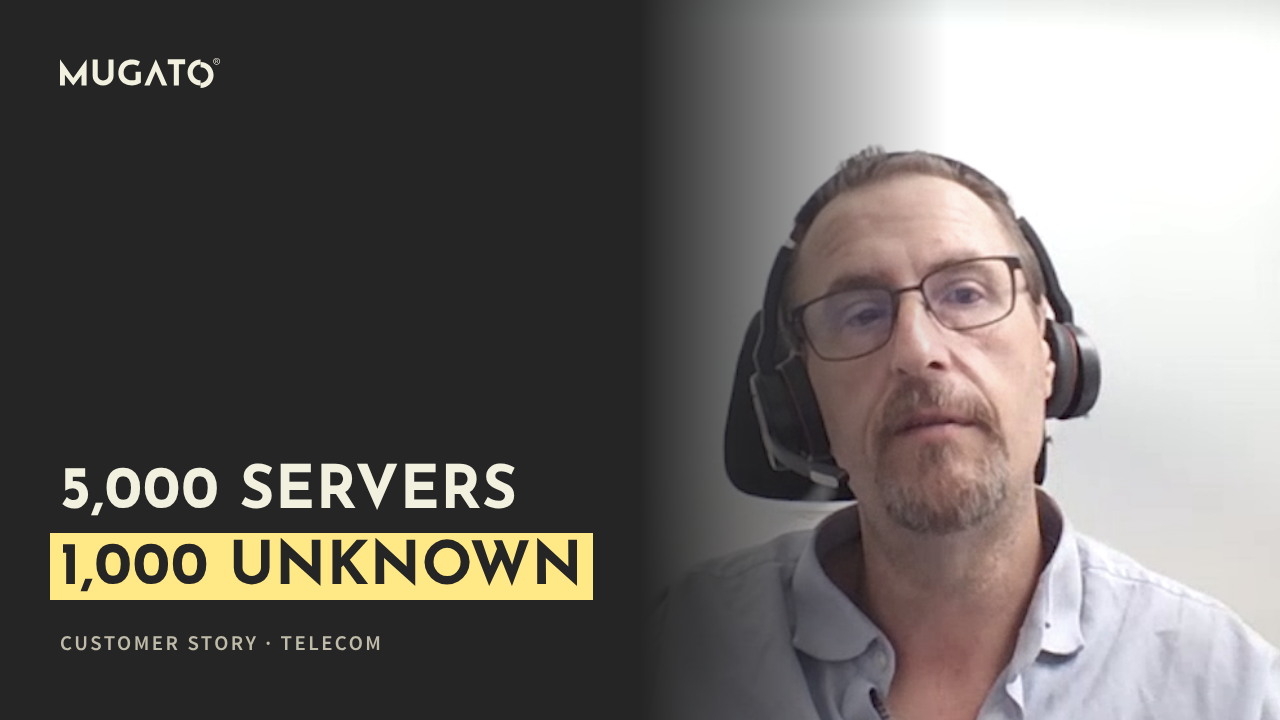
Per Mariager, freelance IT security and network consultant, on the servers nobody had listed before a 5,000-server network move, and the legacy software Mugato found.

Around 5,000 servers had to move from one network to a new one.
The team knew about 4,000. For the rest, it didn't know the departments or the people to ask.
Legacy software found in the inventory.
Nothing was installed on the servers. Production only needed a firewall opening for the collector.
5,000 servers and 1,000 unknowns
Per Mariager has worked as a freelance IT security and network consultant for more than 20 years, with a focus on NIS2, the CIS Controls and DORA. Working for a telecom group, he had two projects on his desk: an automatic software inventory for new NIS2 requirements, and moving around 5,000 servers from one network to a new one.
Both depended on knowing what ran where. The team knew about 4,000 of the servers. The other 1,000 sat with departments and people the project didn't know, so nobody knew what ran on them or who to ask.
Servers nobody could account for
About 1,000 of the 5,000 servers had no known inventory and no known contact.
A new NIS2 requirement
The NIS2 work called for an automatic software inventory instead of lists kept by hand.
No room for more load
Laptops and servers already ran at their limit. Adding a client meant paying for more memory and CPU.
Protected production
Most production servers sit in protected environments, and the production team didn't want anything installed on them.
An inventory with nothing installed
Per first contacted Mugato about software inventory. The conversation soon widened to a CMDB built automatically, with an inventory of everything beside the software.
“Our production guys were saying that we don't want to install anything on our production environment, because most of our servers are in protected environments.”
Per Mariager, Freelance IT security and network consultant
A collector beside production, not on it
Mugato runs from one collector server inside the network, with a user account. It uses the services already on each server, so nothing is installed on the servers themselves. For the protected production environments, the only change was a firewall opening for the collector.
“The best part is that we don't need the client. We only need to open up the firewall…”
Per Mariager, Freelance IT security and network consultant
Network discovery finds the missing servers
Beside the inventory, Mugato's network discovery showed servers the team had been missing, including servers in virtual environments. Where Mugato had a login, it collected the software on those servers too.
“It goes in and says, oh, you have this server sitting in this virtual environment that you have been missing.”
Per Mariager, Freelance IT security and network consultant
Every server's software, version by version
The result is one inventory of servers, hardware, software and version numbers. It's collected continuously, synchronized every 30 minutes, with a full inventory daily, so the NIS2 software inventory no longer depends on lists kept by hand.
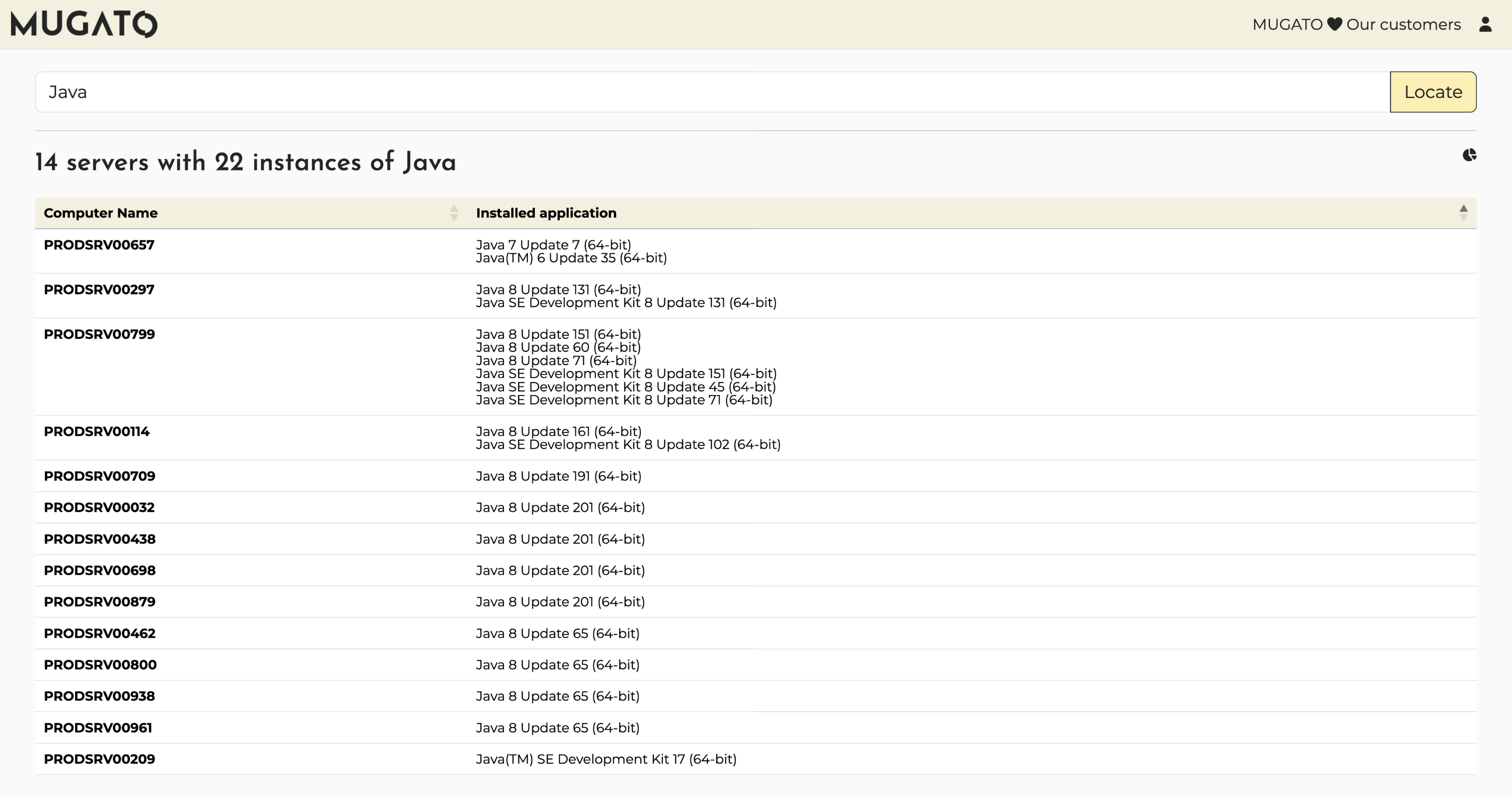
Every version of one product, for example Java, and the servers it runs on. Shown on Mugato's demo environment.
“So we have all the servers, we have all the hardware, we have all the software, we have all the version numbers as well.”
Per Mariager, Freelance IT security and network consultant
A network move planned from facts
An easier move to the new network
With a list of everything installed on every server, the team can group what belongs together and move it. Per describes the move from the old server park as easy, and more and more automatic.
“The transformation from the old server park to the new server side has been easy… because we can just do a list of everything that's installed on all our servers.”
Per Mariager, Freelance IT security and network consultant
Finding the unknowns
Mugato found an old version of Apache on 10 servers, ready to be removed. It also turned up systems that weren't on any list, and software left over from the last migration.
Room to consolidate
Mugato also shows the load on each server. Per sees the next step in that view: combining servers that do the same job and right-sizing the ones that run far below capacity.
“If you are more than five or 10 people together in a company, you need this automatically done, because you don't know all the colleagues you have and how they do stuff.”
Per Mariager, Freelance IT security and network consultant
If you don't have a single source of truth where you can go in and say this is my picture of how everything is today, you can't do anything. You cannot do any security, you can't do anything.
The Mugato capabilities Per's project used
Complete discovery
Find every server, and every device a collected server talks to, with nothing installed on endpoints.

Technical debt
Find old and unused software, and see what depends on it before you remove it.
Data center migration
Move applications in waves, cluster by cluster, with the dependencies known before you start.













Ready to see the
shape of your IT?
Stay ahead with Mugato: get product updates, event invites,
expert insights and more. Or let us show you how Mugato
can map your entire IT landscape without a single agent.