How a CIO consolidated IT after 200+ acquisitions
Henrik Amsinck, a CIO for decades, led IT at a healthcare services group built from more than 200 acquisitions. Mugato mapped the inherited estate in about two weeks and showed his team how to move applications cluster by cluster to a new domain. Consolidating underused servers then cut more from the outsourcing bill than Mugato's yearly fee.
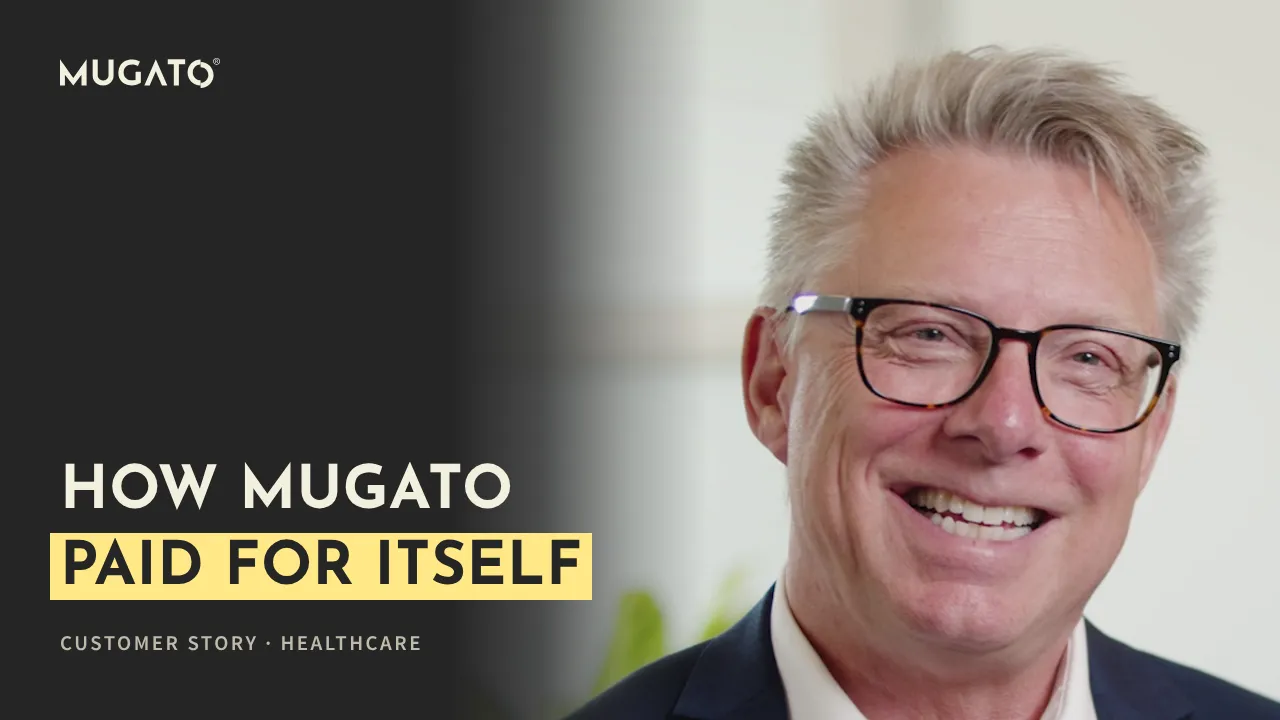
Henrik Amsinck, Group CIO, on mapping an estate built from more than 200 acquisitions and how running fewer servers paid for Mugato.

Each one brought its own IT environment, and its own documentation or none.
Collection ran for a fortnight before the whole domain was mapped into clusters.
On numerous servers and applications, ready to right-size.
Once all eight planned use cases are in place, in Henrik's estimate.
Hundreds of acquisitions, hundreds of environments
Acquisitions helped the group grow fast across many countries, and every deal brought its own IT. After more than 200 of them, Henrik's team ran hundreds of different environments that were hard to understand and harder to manage. In healthcare services, an outage reaches patients.
Missing documentation
Years of acquisitions left documentation out of date at best and often missing completely.
Hundreds of environments
Each acquisition added its own setup, making the landscape complex and hard to manage.
No room for outages
Service disruptions in healthcare directly affect patient care.
Capacity and risk unknown
Without visibility the team couldn't optimize resources, and gaps in documentation left security risks unseen.
An X-ray of the whole domain
Henrik brought in Mugato, the agentless IT discovery and service dependency mapping platform, to see the estate before changing it. Nothing was installed on the servers.
“You need to know what's happening before you start changing and Mugato gives you that X-ray picture into your infrastructure and does it non-intrusively.”
Henrik Amsinck, Group CIO
The whole landscape in about two weeks
After roughly two weeks of collection, Mugato showed server clusters, capacity use and configuration details that had been hidden for years. It was the first complete picture the team had of its own domain.
“We let it run for a fortnight and then suddenly, for the first time we saw a precise x-ray of our entire domain in terms of clusters of servers, utilization parameters and configuration data. We never had that fine grain understanding of our own domain before.”
Henrik Amsinck, Group CIO
Moving cluster by cluster
Mugato showed how the applications connect. That let the team move technology and data to a new domain one cluster at a time without disrupting the business, and spot certificates that could be retired along the way.
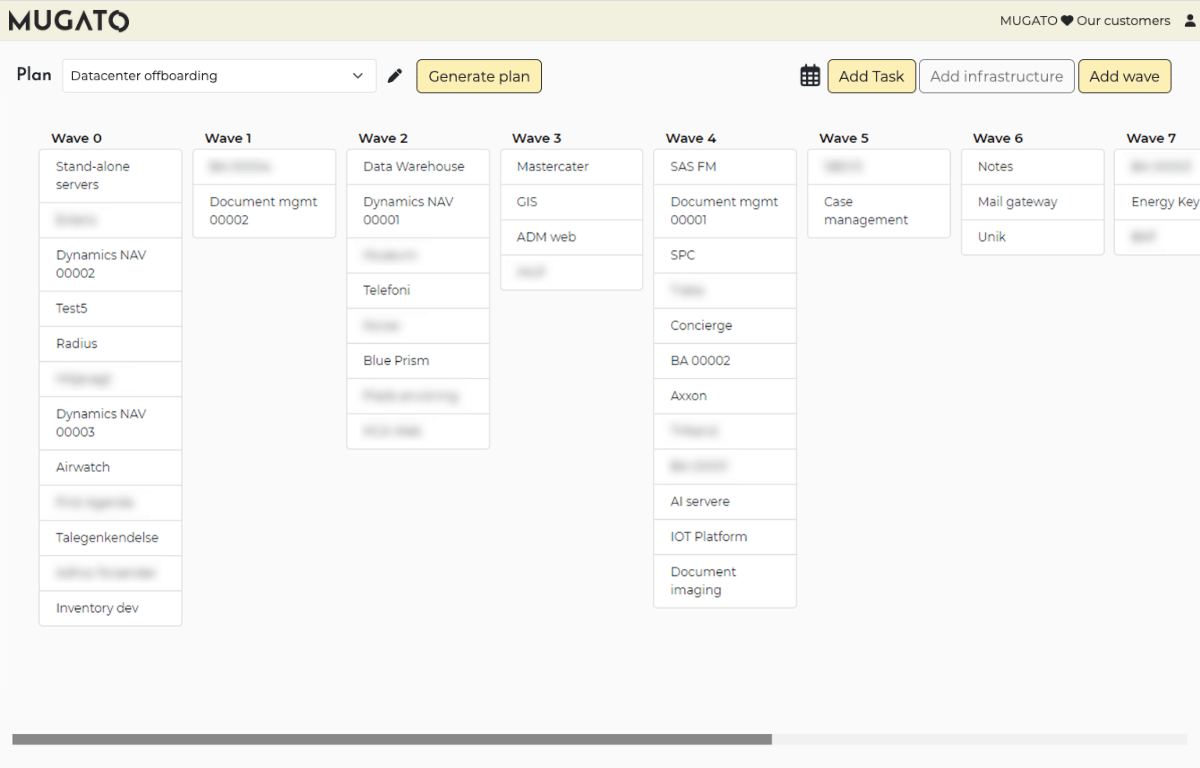
A wave plan in the Mugato portal: applications grouped into the clusters that have to move together.
“Mugato even goes to the lengths of giving you transformation waves, the recipe for how to move your applications cluster by cluster without business disruption.”
Henrik Amsinck, Group CIO
Out of a risky setup
The same picture gave the team the facts to consolidate and migrate away from a complex and fragile infrastructure.
“Mugato gave us a way to move out of a very complicated and very dangerous infrastructure setup.”
Henrik Amsinck, Group CIO
The savings covered the bill
Return within months
Mugato found numerous applications and servers running at less than 50% capacity. Right-sizing them cut the outsourcing bill by more than Mugato's yearly fee, so the first use case paid for the platform within months.
A more data-driven way to run infrastructure
The first win opened the door to more. Henrik's plan extended Mugato to a stronger security posture, more efficient operations, less administrative overhead and lower infrastructure risk.
A fivefold return expected
Henrik expected to make Mugato's cost back five times over once all eight use cases were in place.
“Mugato is a great enabler for getting a structured approach to a common infrastructure if you are going through a lot of acquisitions.”
Henrik Amsinck, Group CIO
Henrik recommends running Mugato straight after each acquisition, to see the application landscape before integrating it.
We immediately saw that we could lower the number of servers, and there was so much money in that exercise that we instantly had a surplus on our Mugato investment. Mugato is one of the few products that actually makes money for you. When we are done with all 8 use cases for Mugato, we will probably have made our money back 5-fold.
The Mugato capabilities Henrik's team used
Cost optimization
Find duplicate and underused servers, then right-size from what they actually use.

Data center migration
Move applications in waves, cluster by cluster, with the dependencies known before you start.
Service dependency mapping
Group servers into the application services they run and see what depends on what.











Ready to see the
shape of your IT?
Stay ahead with Mugato: get product updates, event invites,
expert insights and more. Or let us show you how Mugato
can map your entire IT landscape without a single agent.