
For IT leaders who can’t afford surprises
the shape
of your it
Mugato is the always-current map of your IT estate. It works out every application and dependency from how your servers talk, and keeps the history. So you know what a change will hit before you make it, and every AI answer starts from facts.












Asset discovery tools
Extensive Keyboard Time
Static Documentation
A Smarter, more effortless way to manage it infrastructure
Reveal your IT architecture in real time with complete discovery, continuous collection, fully automated SDM and prescriptive guidance.
mugato's five CORE CAPABILITIES
Discover everything
Mugato's agentless discovery automatically identifies everything in your IT environment. Catalog every IT, IoT, OT, and public cloud device, application and interaction: managed, unmanaged, or shadow. Eliminate dangerous blind spots and fix potential issues before they become real problems.


Continuous collection of relations, processes & resource use
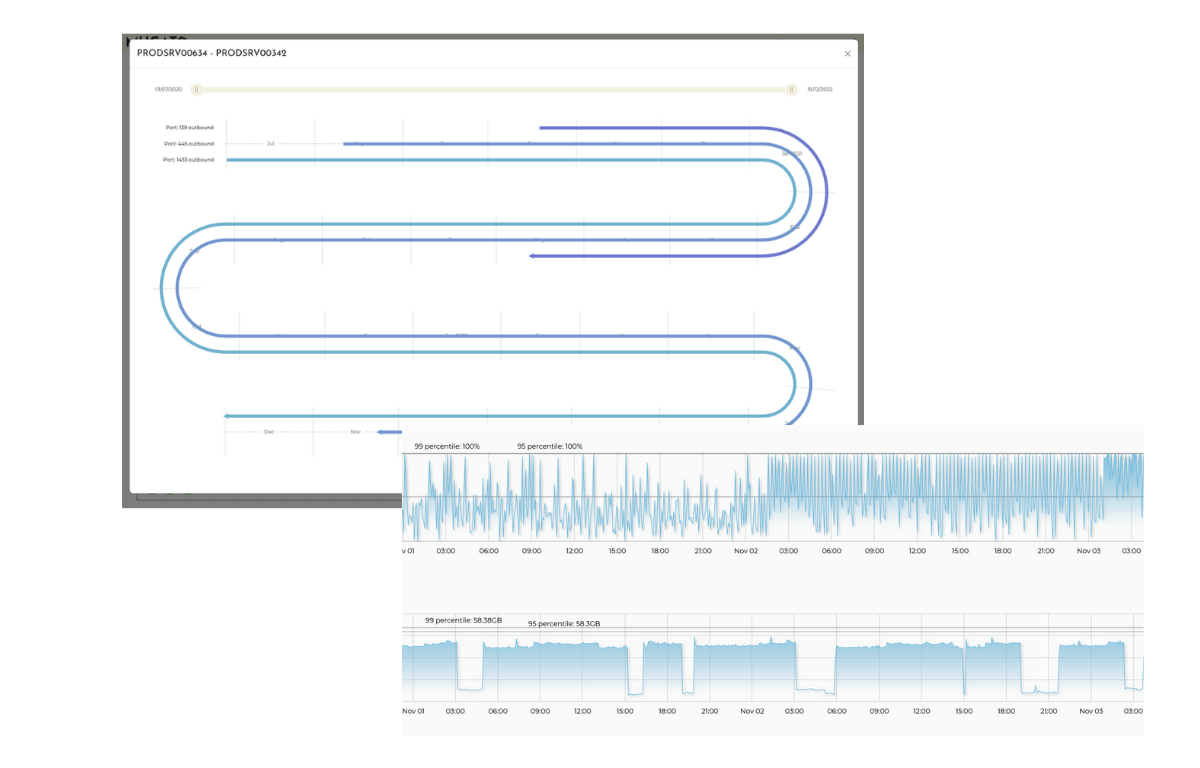
Mugato not only detects that two devices are communicating, we also deliver the frequency and volume. Mugato automatically detects whether it’s a rare ephemeral or high-transactional continuous connection. We break data down into individual protocols, each with minute-granularity temporal datasets, enabling before-and-after insights for change tracking, establishment of baselines, and unique 7-dimensional rightsizing.
Next-generation dependency mapping
Mugato starts where traditional dependency mapping stops. We provide full visibility into your business processes and software across all systems. Our industry-leading process mining technology uncovers this visibility.
Our end-to-end AI neural core defines the scope of application services through behavioral analytics. It uses causal and predictive AI to analyze the communication patterns that form the connective tissue of your enterprise.
Mugato’s behavioral approach eliminates the need for a library or dictionary list of known applications. We work independently of whether software is off-the-shelf, in-house custom code, or third-party custom software.
We don’t use static tags or fixed stacks and groups that decay in an ever-changing IT world. Mugato continuously updates and enriches your data and then feeds your CMDB or any other operational system.
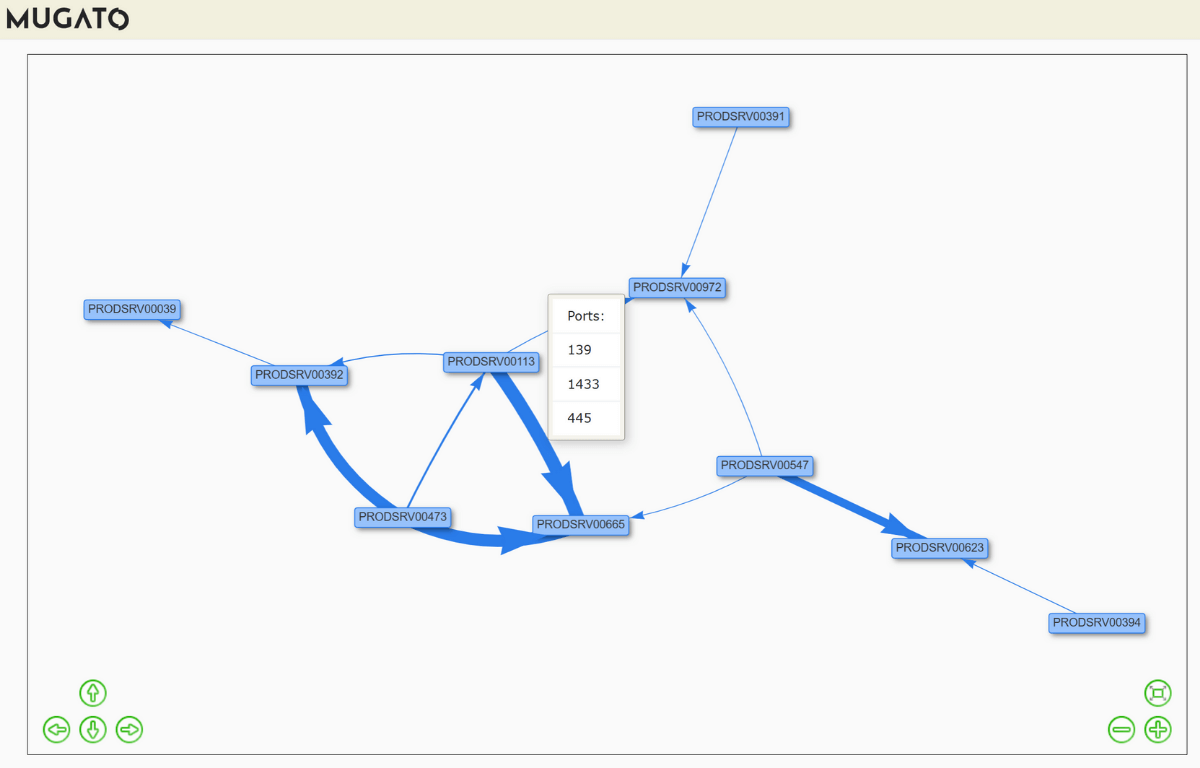
Fully automated service dependency mapping
Mugato automatically clusters application services into business services through service dependency mapping (SDM). We deliver the missing piece that connects the dots between observability and enterprise architecture tools. Observability tools cluster devices and software through dependency mapping (DM), usually in one IT silo. Enterprise architecture tools diagram business capabilities, usually in another IT silo.
True SDM is not just an add-on to a CMDB, it’s a capability with standalone business value, including improved visibility, faster incident handling, smarter change management, stronger security and resilience, and reduced risk.
Gartner emphasizes that every IT organization should have SDM because it enhances IT service management, supports innovation and transformation programs, and integrates with existing environments to create additional value.
SDM serves as a foundational capability for modern IT operations. It improves agility, resilience, and decision-making, while leaving static dependency mapping behind.

Decision intelligence for planning & execution
Mugato’s fully automated decision intelligence platform generates plans with sequences of events to support, automate, and augment decision-making by humans or machines.
We deliver prescriptive guidance that tells you exactly what to do, when, and in what order. You no longer need to guess which systems can be moved together or which changes might cause disruption. Mugato’s transformation waves generate actionable step-by-step instructions powered by the composition of data, analytics, knowledge, and AI techniques.
We provide collaborative capabilities for decision modeling, whether you’re doing major application upgrades, data center exits, disaster recovery plans with minimally viable company operations, cloud transformations, or any other plan requiring impact analysis before changes are made.
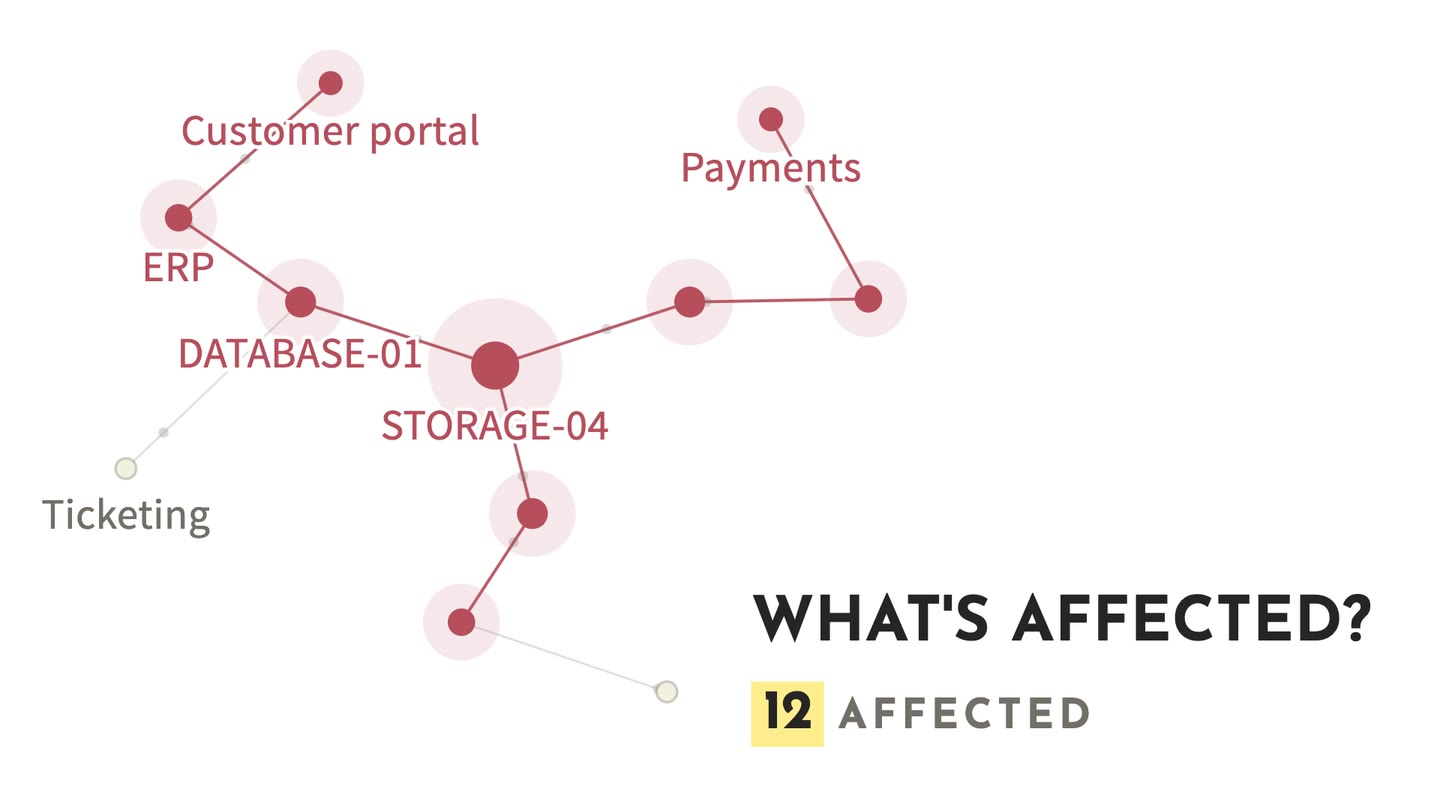
Mugato helps you identify critical paths and dependencies to avoid cascading failures.
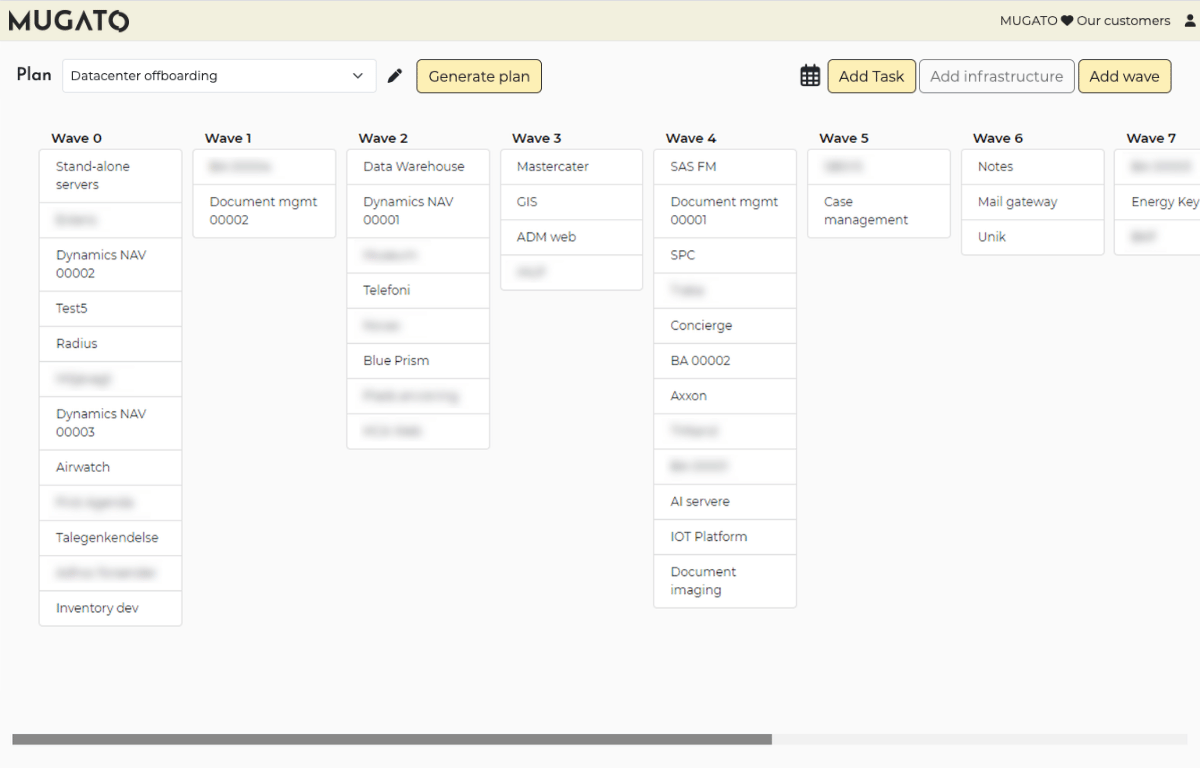
The backbone for strategic decisions


Highly granulated temporal data combined with behavioral analytics paints a much more accurate picture than any other tool or human process based on whiteboard workshops and tribal knowledge ever will.
With extremely rich visual mapping, Mugato delivers intuitive interfaces that show how everything connects, giving you a clear, actionable understanding of your IT estate. SDM turns your IT environment from a black box into a transparent, navigable map, boosting agility, resilience, and confidence across operations.
current tools vs mugato
CURRENT BEST-OF-BREED OBSERVABILITY TOOLS
Essentially just asset trackers or topology viewers. They only tell you:
Server A connects to server B on port 80
Mugato
With Mugato, you get robust service dependency mapping that combines IT observability with enterprise architecture. Mugato tells you:
Your order processing system (15 servers) talks to the payment gateway every 2.3 seconds, peaked at 3 a.m., has been doing this for 6 months, costs $45K/month, has 3 zombie servers that haven’t processed anything in the past 90 days except burning cash, and is exposed to the internet through an undocumented connection that appeared last Tuesday.
Try Mugato Live
full visibility, zero footprint

Nothing installed on endpoints, eliminating security risks

Fully automated mapping of servers into application services

No measurable impact on network performance
What customers say about Mugato
My favorite thing about Mugato? Mugato revealed that my service provider was overcharging me on capacity utilization. We could immediately show that we could lower the number of servers and there was so much money in that exercise that we immediately had a surplus on our Mugato investment.

With company mergers, there is often a need to be able to look ahead, but in order to do so, it is necessary to be able to look backwards at the same time. With Mugato I get just that opportunity.

Most companies out there are using agents. Our biggest problem is that our servers are already pressed to the maximum. With Mugato, you don't need to do anything. Just install the collector on a server, create a user, and you can start collecting information.

Frequently asked questions
about Mugato
What is Mugato?
How does Mugato work without agents?
What is service dependency mapping?
How does Mugato show the blast radius of a change or outage?
How is Mugato different from IT asset management and discovery tools?
What are Mugato's temporal datasets?
Is agentless collection a security risk?
How long does it take to implement Mugato?
Does Mugato integrate with ServiceNow and enterprise architecture tools?
Can I connect Mugato to AI assistants like Claude, ChatGPT or Copilot?
How is Mugato licensed?
Who uses Mugato?
Ready to see the
shape of your IT?
Stay ahead with Mugato: get product updates, event invites,
expert insights and more. Or let us show you how Mugato
can map your entire IT landscape without a single agent.